是甚麼啟發我投身消防安全研究?
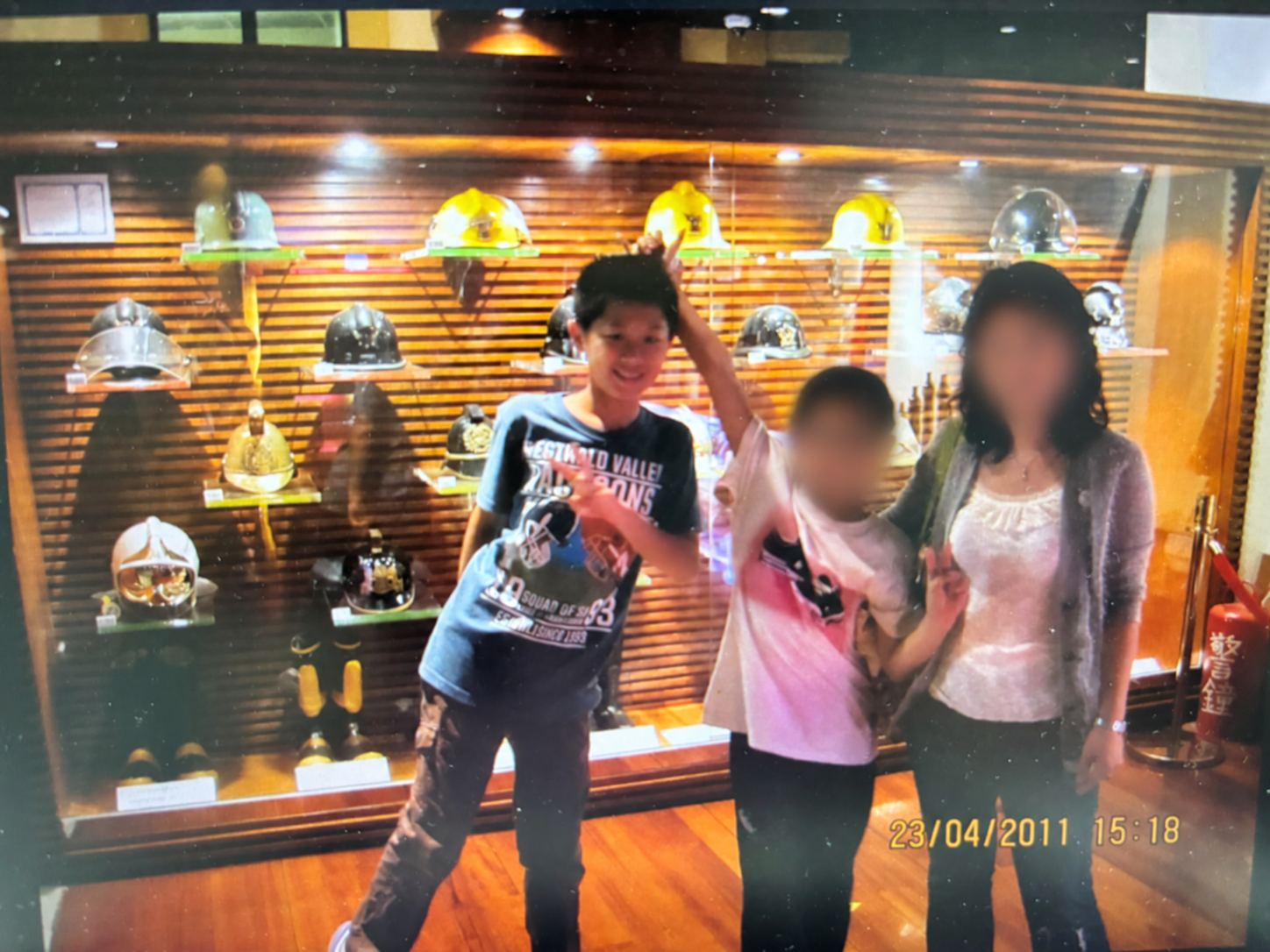
童年時參觀澳門消防博物館(左為黃灝賢)。A childhood visit to the Macau Fire Services Museum (Deacon on the left).
「咿—嗚—咿—嗚—」小時候,每當有消防車經過,我都會忍不住望着它。相信很多小朋友也有過類似的反應:看到紅色的消防車、聽到警號聲,總會覺得很吸引,也會好奇它正趕去哪裏、要處理甚麼事情。對當時的我來說,消防車和消防員都有一種很特別的吸引力。
我記得小學時曾參加過一次消防局參觀活動,那是我第一次比較近距離認識消防員的工作。原來他們不只是救火,也會救人、拯救動物,甚至處理很多不同類型的緊急情況。那次經歷令我覺得,消防是一件很正面、很有意義的事。坦白說,我小時候並不是一個很早就立定志向的人;不像有些朋友從小就說想做醫生、老師或警察,我沒有一個很清晰、非做不可的目標。但「消防」這件事,的確一直留在我的記憶裏。
後來我在中學接觸屋宇設備工程,開始學習建築物內的「風、火、水、電」系統,才慢慢明白,原來消防安全不只是消防車和消防員。大廈裏的消防系統,其實一直在日常生活中發揮作用。消防員當然是非常重要的一環,但如果火警可以更早被發現,風險可以更早被處理,很多事情也許就不需要發展到最危急的一步。
也是從那時候開始,我對消防安全有了另一層理解。傳統消防系統有很穩健的法規和基礎,這是非常重要的;但社會環境、建築形態和人的使用習慣都一直在變。如果我們希望消防安全可以做得更好,除了符合基本要求,也應該思考有沒有方法令系統更主動、更即時、更貼近現場需要。工程、數據和科技,正正可以在這些地方發揮作用。
我投身消防安全研究,並不是一開始就有一個很宏大的計劃,而是由一份小時候的興趣,慢慢延伸成一個我真正想投入的方向。我一直很欣賞基礎研究,因為很多重要的突破都來自對原理的深入理解;但我自己更感興趣的,是如何把學術上的發現轉化成現實中真正用得上的東西,而不是只停留在論文或概念之中。對我來說,科研最吸引的地方,是它既可以讓我不斷探索和成長,也有機會在現實中發揮作用,為社會帶來實際幫助。
What inspired me to pursue fire safety research?
“Bee-doo, bee-doo.” When I was young, whenever a fire engine passed by, I could never help but look at it. I believe many children have had a similar reaction: seeing a bright red fire engine and hearing its siren would naturally catch our attention and make us wonder where it was headed and what kind of emergency it was responding to. To me at that age, fire engines and firefighters had a very special kind of appeal.
I remember joining a visit to a fire station when I was in primary school. It was the first time I got to understand the work of firefighters up close. I learned that they not only put out fires but also rescued people, saved animals, and responded to many different types of emergencies. That experience made me feel that firefighting was something very positive and meaningful. To be honest, I was not the kind of child who had a clear ambition from an early age. Unlike some friends who said they wanted to become doctors, teachers, or police officers, I did not have a single definite goal I felt I had to pursue. But the idea of “firefighting” did stay in my memory.
Later, when I was in secondary school, I was introduced to building services engineering and began learning about the various systems within buildings — air conditioning and ventilation, fire services, water supply, and electricity. It was only then that I gradually realized fire safety was not only about fire engines and firefighters. The fire safety systems inside buildings are, in fact, quietly playing a role in our everyday lives. Firefighters are, of course, a very important part of the whole picture, but if a fire can be detected earlier and risks addressed sooner, many incidents may not reach the most critical stage.
From that point on, I began to understand fire safety on a different level. Traditional fire safety systems are built on well-established regulations and foundations, which are extremely important. However, our social environment, building forms, and how people use spaces are constantly changing. If we want fire safety to improve further, beyond simply meeting basic requirements, we should also ask whether there are ways to make systems more proactive, real-time, and responsive to actual site conditions. This is exactly where engineering, data, and technology can play an important role.
Therefore, my decision to pursue fire safety research did not stem from a grand plan at the outset. It gradually grew from a childhood interest into a direction I truly wanted to devote myself to. I have always appreciated fundamental research because many important breakthroughs come from a deep understanding of underlying principles. At the same time, what interests me even more is how academic discoveries can be translated into genuinely useful real-world applications, rather than remaining only as papers or concepts. To me, the most attractive part of research is that it allows me to keep exploring and growing, while also giving me the opportunity to make a practical contribution to society.